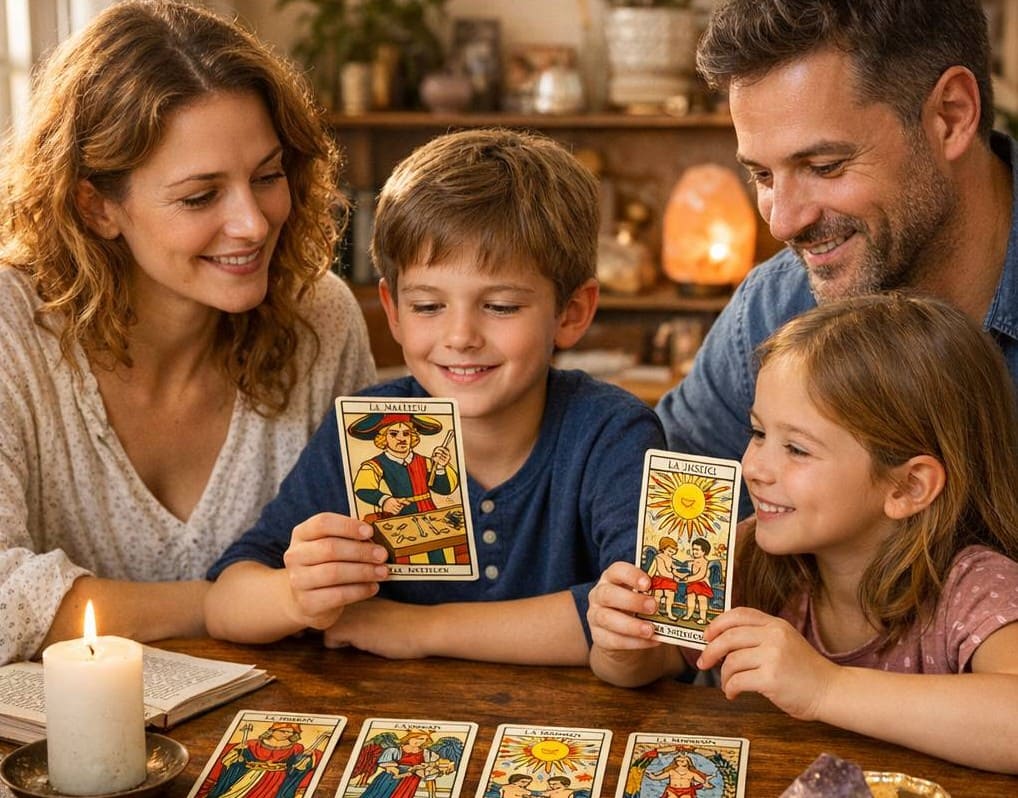
Discover how Lenormand cartomancy can improve family communication, help parents better understand their children, reduce anxiety about the future, and encourage emotional growth through positive and practical divination guidance.
Introduction
More and more parents are turning toward spiritual and psychological tools to better understand their children, improve family communication, and create a calmer emotional environment at home.
In today’s fast-paced world, many families struggle with stress, misunderstandings, school pressure, emotional sensitivity, or fears about the future. Parents often seek reassuring ways to reconnect with their children while also gaining clarity about their own emotions and parenting choices. This is where cartomancy, especially the Lenormand oracle, can offer an interesting and surprisingly practical perspective.
Unlike popular misconceptions, divinatory cards are not only used to predict the future. They can also function as symbolic tools for reflection, emotional insight, and personal growth. Through simple and concrete imagery, the Lenormand deck helps parents observe family dynamics in a more intuitive and compassionate way.
Why the Lenormand deck is unique
The Lenormand oracle is appreciated for its accessible symbolism and grounded interpretations. While some tarot systems focus deeply on spiritual transformation, Lenormand cards often reflect everyday situations and emotional realities with clarity.
- The Child card may symbolize innocence, education, or emotional development.
- The House card often represents security, stability, and family life.
- The Birds card can reveal communication issues, worries, or important discussions.
- The Sun card generally brings positive energy, optimism, and confidence.
Rather than creating fear, a mindful cartomancy practice can encourage parents to approach their children with more empathy, confidence, and emotional awareness.
Cartomancy as a tool for emotional connection
For beginners discovering divination for the first time, the Lenormand system can become a gentle guide for self-reflection. It encourages parents to ask constructive questions about their children’s needs, emotional wellbeing, and future potential.
When approached with balance and kindness, card readings may help families:
- Improve communication between parents and children
- Better understand emotional reactions and behaviors
- Reduce anxiety surrounding a child’s future
- Create positive discussions within the household
- Encourage confidence and emotional support
Ultimately, the true strength of the Lenormand oracle lies not in predicting a fixed destiny, but in helping families develop trust, understanding, and emotional harmony together.
The Lenormand Deck: A Practical Mirror of Family Life
The Lenormand oracle is often appreciated because it speaks directly about everyday life, emotions, relationships, and concrete family situations.
For many parents discovering cartomancy for the first time, the Lenormand deck feels less intimidating than traditional tarot systems. Its symbols are simple, visual, and deeply connected to daily experiences. Instead of presenting abstract spiritual concepts, Lenormand cards tend to reflect practical realities that families can easily recognize.
Within the context of parenting and education, this approach can become extremely comforting. A reading may reveal communication tensions, emotional needs, hidden fears, or positive opportunities within the family environment. Rather than predicting dramatic events, the cards often act like emotional indicators that encourage awareness and understanding.
Why Lenormand resonates with parents
Parents frequently look for guidance that feels realistic and emotionally accessible. The Lenormand system answers this need thanks to its clear symbolism and grounded interpretations.
- Its imagery is easy to understand, even for beginners.
- The cards focus on daily life and concrete situations.
- Readings encourage observation rather than fear.
- It supports emotional reflection and family communication.
- The oracle can help identify emotional patterns within the household.
Unlike fatalistic approaches to divination, Lenormand readings are often interpreted as guidance tools. Parents may use them to better understand the atmosphere surrounding their child’s emotional development, school experience, friendships, or confidence level.
Important Lenormand cards linked to children and family
Some cards naturally carry strong family-oriented meanings and can provide valuable emotional insight during a reading.
- The Child: innocence, learning, sensitivity, growth, or a new stage in life.
- The House: emotional security, family protection, and stability.
- The Tree: long-term development, health, and emotional roots.
- The Birds: conversations, worries, communication, or nervous tension.
- The Sun: positivity, confidence, joy, and success.
Very often, the cards reveal not only the child’s emotional needs, but also the hidden anxieties and protective instincts carried by the parents themselves.
A psychological approach to family readings
One of the greatest strengths of Lenormand cartomancy is its psychological dimension. The cards encourage parents to slow down and observe situations with greater intuition and compassion. Sometimes, a simple reading can highlight unspoken emotions or reveal that a child needs more reassurance, freedom, or emotional support.
In this sense, the oracle becomes less about “telling the future” and more about improving emotional awareness within the family. It opens the door to healthier communication, more empathy, and a deeper understanding of each family member’s emotional reality.
How Cartomancy Can Improve Communication Between Parents and Children
One of the most valuable benefits of cartomancy within family life is its ability to encourage open, honest, and compassionate communication.
Many parents struggle to fully understand what their children are feeling, especially during emotionally sensitive periods such as school difficulties, adolescence, social anxiety, or major family changes. Children themselves may not always have the words to explain their emotions clearly. In this context, the Lenormand oracle can become a gentle support tool that helps create meaningful conversations.
Because the cards communicate through symbols and images, they often make emotional discussions feel less intimidating. A child or teenager may find it easier to react to a symbolic card than to direct questions about their feelings. For parents, the cards can also reveal unconscious worries, expectations, or emotional patterns that influence the family atmosphere.
Using the cards as a conversation starter
The Lenormand deck can help families introduce emotional topics naturally and without pressure. Instead of trying to “predict” a child’s future, many parents use simple readings to better understand what their child may need emotionally.
- How is my child experiencing this situation?
- What emotional support would help them right now?
- How can I improve communication with my child?
- What atmosphere currently surrounds our family life?
- What strengths can my child develop with confidence?
These kinds of reflective questions encourage listening rather than control. This is one reason why psychological cartomancy has become increasingly popular among adults seeking more conscious parenting approaches.
The symbolic power of Lenormand cards
Some Lenormand cards naturally encourage emotional dialogue and self-expression within the family environment.
- The Birds: conversations, nervousness, overthinking, or daily communication.
- The Heart: affection, emotional bonds, love, and empathy.
- The Child: innocence, emotional sensitivity, curiosity, and learning.
- The Moon: emotions, intuition, imagination, and emotional recognition.
- The Garden: friendships, social interactions, and openness to others.
When interpreted with kindness and balance, these symbols can inspire constructive family discussions. They help parents focus not only on problems, but also on emotional solutions and positive evolution.
Very often, the cards do not simply reveal what a child feels — they also help parents recognize the emotional energy they themselves bring into the relationship.
Creating a calmer emotional environment at home
Regular moments of reflection around the cards may encourage families to slow down and reconnect emotionally. Even simple readings can become peaceful rituals where each family member feels heard and respected.
For children, feeling emotionally understood can strengthen self-confidence and trust. For parents, the practice encourages patience, empathy, and emotional awareness. In this way, cartomancy becomes not only a divinatory practice, but also a personal development tool capable of nurturing stronger and healthier family relationships.
Helping Children Build a Positive Future Through Lenormand Guidance
Contrary to common misconceptions, Lenormand cartomancy is not about locking a child into a fixed destiny, but about identifying positive potentials, emotional strengths, and supportive opportunities for growth.
Many parents naturally worry about their children’s future. Questions about education, friendships, emotional wellbeing, self-confidence, or future success can sometimes create stress and uncertainty within the household. In this context, the Lenormand oracle may offer a reassuring and constructive perspective by helping parents focus on encouragement rather than fear.
The symbolic language of the cards often highlights qualities that may already exist within a child but are not yet fully recognized. A reading can become an opportunity to support a child’s natural talents, emotional intelligence, creativity, or resilience. Instead of predicting failure or disappointment, a balanced interpretation encourages families to explore possibilities with hope and awareness.
Seeing potential instead of limitations
One of the most empowering aspects of Lenormand readings is their ability to shift attention toward positive development. Parents may begin to notice emotional or personal qualities that deserve more support and encouragement.
- Creativity and imagination
- Social intelligence and empathy
- Independence and confidence
- Academic motivation
- Emotional resilience during difficult periods
In many cases, the cards simply act as mirrors reflecting what children already carry within themselves. This approach can help parents adopt a more encouraging attitude and create a healthier emotional environment at home.
Lenormand cards associated with hope and growth
Several cards in the Lenormand system are particularly linked to optimism, progress, and emotional evolution.
- The Sun: success, joy, confidence, and positive energy.
- The Stars: inspiration, dreams, intuition, and future possibilities.
- The Clover: simple opportunities, luck, and lighthearted moments.
- The Rider: progress, movement, new experiences, and positive news.
- The Garden: social development, friendships, and openness to the world.
When these cards appear during family-oriented readings, they often provide emotional reassurance to parents who may be experiencing anxiety about their child’s future path.
The true purpose of positive cartomancy is not to predict a perfect future, but to inspire confidence, emotional support, and conscious parenting choices that help children grow in healthy and fulfilling ways.
Encouraging confidence and emotional security
Children frequently develop their confidence through the emotional atmosphere created around them. When parents focus on fear, pressure, or constant uncertainty, children may unconsciously absorb these emotions. Lenormand guidance can help shift this energy toward support, trust, and constructive action.
For example, a reading revealing emotional sensitivity may encourage parents to create a calmer environment. A card symbolizing creativity could inspire them to nurture artistic activities or self-expression. In this way, cartomancy becomes less about prediction and more about emotional guidance and personal development.
By approaching the cards with kindness and emotional intelligence, parents may discover new ways to support their children while also reducing their own fears about the future. The result is often a stronger sense of hope, connection, and emotional balance within the family.
Conclusion
The true strength of Lenormand cartomancy within family life lies not in predicting destiny, but in helping parents and children build deeper emotional understanding and stronger human connections.
Throughout family challenges, emotional uncertainties, and everyday responsibilities, many parents search for tools that can help them reconnect with their children in a more peaceful and compassionate way. The Lenormand oracle offers a unique approach because of its concrete symbols, accessible messages, and practical perspective on daily life. Rather than encouraging fear about the future, it invites families to reflect, communicate, and grow together.
By using the cards as instruments of dialogue and emotional awareness, parents may better understand the hidden emotional needs of their children while also becoming more conscious of their own fears, expectations, and parenting patterns. This process often encourages healthier communication, emotional reassurance, and greater empathy inside the home.
What Lenormand can bring to family relationships
- More open and compassionate communication
- Better emotional understanding between parents and children
- Reassurance during stressful or uncertain periods
- Positive guidance instead of fear-based predictions
- A supportive atmosphere focused on emotional growth
The cards become especially meaningful when they are approached with balance, kindness, and emotional maturity. They should never replace real conversations, education, or personal responsibility. Instead, they can serve as symbolic tools that encourage reflection and emotional connection.
Ultimately, mindful cartomancy helps families focus less on controlling the future and more on creating a present filled with trust, listening, emotional support, and love.
A modern and compassionate vision of divination
Today, many adults are rediscovering divination not as a source of fear or superstition, but as a pathway toward self-awareness and personal development. In this context, the Lenormand deck stands out because of its simplicity, realism, and emotional accessibility.
For parents interested in psychological tarot, intuitive guidance, or spiritual wellbeing, the cards can become valuable companions in understanding family dynamics and encouraging positive evolution. Even small moments of reflection around the oracle may help create a calmer household atmosphere where each family member feels emotionally recognized and respected.
In the end, perhaps the greatest lesson of family cartomancy is simple: children flourish best when they grow in an environment built on emotional security, encouragement, empathy, and sincere communication. And sometimes, the symbolic wisdom of the cards can gently remind parents to cultivate exactly that.
To better understand the symbolic language used in family-oriented readings, you can also explore this detailed guide about the meaning of Petit Lenormand cards and their practical interpretation in everyday life.