Hair loss in women hits different, doesn’t it? One day you’re flipping your hair like you’re in a shampoo commercial, the next you’re staring at clumps in the shower drain wondering what the hell happened. Nearly 40% of women deal with this by their 40th birthday, yet we’re still whispering about it like it’s some dirty secret. Men get to rock the bald look and call it distinguished, but when women lose hair? That’s a whole different ball game.
Your hair is basically your signature, your mood ring, your confidence booster all rolled into one. When it starts bailing on you, it feels personal. But here’s the thing nobody talks about: female hair loss isn’t a life sentence. You’ve got options, real ones that actually work. The trick is figuring out what’s causing your hair to peace out in the first place.
Why Female Pattern Hair Loss Sneaks Up on You
Female pattern hair loss doesn’t knock politely on your door like male baldness does. Guys get that classic receding hairline that screams “I’m going bald!” Women? We get the stealth version. Your part gets wider, your ponytail feels skinnier, and suddenly you’re doing weird contortions with mirrors trying to see your scalp.
The Ludwig Scale breaks this down into three stages that basically go from “hmm, is it just me?” to “okay, this is definitely happening.” Stage one is sneaky thin coverage at the top. Stage two makes your part look like a highway. Stage three leaves you seeing scalp through what’s left of your hair.
When Your Genes Aren’t Playing Fair
Androgenetic alopecia sounds fancy, but it’s just your DNA being a pain in the ass. About 30 million American women got dealt this genetic hand, and it doesn’t care if you eat kale or do yoga. Your hair follicles are basically allergic to DHT, a hormone that slowly chokes them out until they give up making decent hair.
The really unfair part? While guys start noticing this in their twenties, women often cruise along fine until menopause hits. Then estrogen takes a nosedive, and suddenly those follicles have no protection from DHT’s rampage. It’s like your hormones threw your hair under the bus right when you thought you had your life figured out.
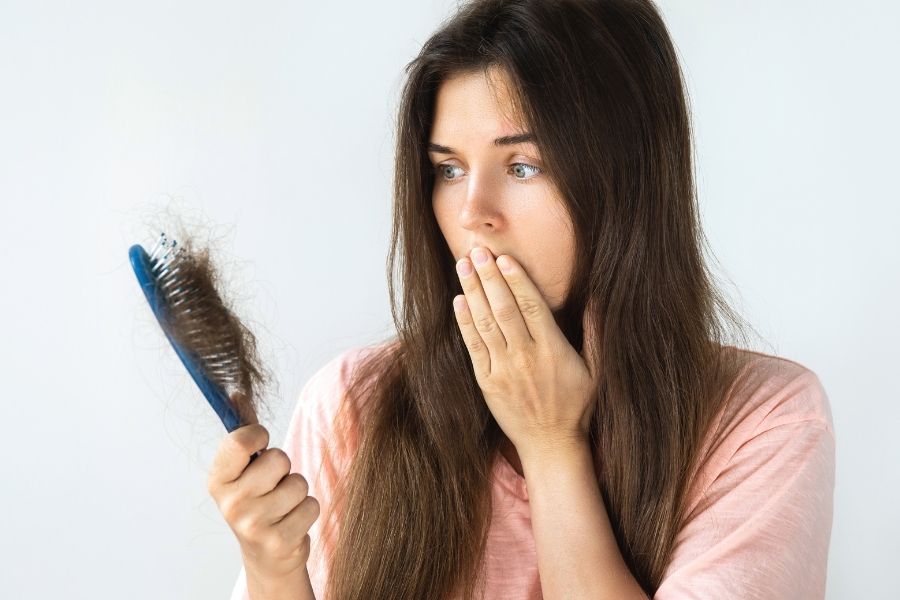
Hormones: The Drama Queens of Hair Loss in Women
Your hormones run the show when it comes to hair, and they’re honestly pretty dramatic about it. Hormonal hair loss in women loves to crash the party during pregnancy, postpartum, menopause, or whenever your thyroid decides to act up. One day you’re growing hair like Rapunzel, the next you’re shedding like a golden retriever in summer.
Pregnancy gives you that gorgeous thick hair because estrogen keeps everything in growth mode. But after delivery? All that extra hair gets the eviction notice at once. New moms often freak out thinking they’re going bald, but it’s just your body’s way of hitting the reset button.
Your Thyroid’s Hair Tantrum
Think of your thyroid as your body’s cruise control. When it goes haywire, your hair feels it big time. Hair thinning in women often starts with thyroid drama that nobody connects until it’s obvious. Slow thyroid makes everything sluggish, including hair growth. Overactive thyroid speeds everything up until your hair can’t keep up and just quits.
Women get thyroid problems way more than men, which explains why we deal with more complex women’s hair loss situations. It’s not just one thing going wrong; it’s like a domino effect of hormonal chaos.
PCOS: The Modern Hair Loss Villain
One in ten women has PCOS, making it a major player in hair loss in women under 40. It’s like hitting the hormone lottery in the worst way possible. High androgens, wonky insulin, chronic inflammation, all ganging up on your poor hair follicles. You lose hair where you want it and grow it where you definitely don’t.
The insulin resistance piece is especially cruel because it creates this vicious cycle. High insulin cranks up androgen production, which kills your hair follicles while making unwanted facial hair sprout like weeds. It’s your body’s idea of a sick joke.
When Your Diet Betrays Your Hair
Your hair follicles are basically tiny factories that never sleep, constantly churning out new growth. Nutritional deficiencies hair loss happens when these factories run out of raw materials. Iron deficiency hits about 20% of women before menopause, and it’s often the easiest hair loss cause to fix.
Most doctors will tell you your iron is “fine” if it’s anywhere in the normal range. But your hair doesn’t care about normal. It wants optimal. Ferritin levels that work for preventing anemia might leave your hair starving for iron.
Protein: Your Hair’s Best Friend
Hair is basically protein with attitude, so when you don’t eat enough quality protein, your hair gets cranky. Extreme dieting, poorly planned vegan diets, or gut issues that mess with protein absorption can all leave your hair hanging.
Your body plays favorites with protein, sending it to vital organs first. Hair follicles get whatever’s left over, which might not be much if you’re running on fumes. It’s like being last in line at the buffet when everyone else got there first.
Stress: The Hair Killer Nobody Talks About
Chronic stress doesn’t just make you feel crazy; it literally makes your hair fall out. When cortisol stays high for months, it tells your hair follicles to take an extended vacation. The really annoying part? Stress-related hair loss shows up three to six months later, so you’re left playing detective trying to figure out what triggered it.
Modern life serves up stress like it’s going out of style. Work pressure, family drama, money worries, social media comparison hell. Your hair follicles absorb all that tension and eventually wave the white flag.
When Stress Goes Nuclear
Sometimes stress flips your immune system into attack mode, and it decides your hair follicles are the enemy. Alopecia areata creates these perfect bald patches that can appear overnight like crop circles on your scalp. It’s your body basically having an autoimmune meltdown.
The weird thing about alopecia areata is how it connects to other autoimmune conditions. It’s like your immune system gets confused and starts attacking multiple targets instead of just doing its job.
Real Treatments That Actually Work
The hair loss treatment for women game has seriously leveled up. We’re not stuck with just accepting our fate or hiding under hats anymore. Today’s treatments hit female pattern hair loss from multiple angles, giving you actual hope instead of empty promises.
Minoxidil: The OG Hair Saver
Minoxidil is still the gold standard for topical hair loss treatment, and there’s a reason it’s been around forever. Someone noticed that blood pressure patients were sprouting hair in weird places, and boom, accidental hair loss cure. The 5% strength that used to be men-only is now fair game for women, and it works way better than the wimpy 2% version.
You’ve got to commit to this stuff though. It takes about four months to see if it’s working, and you’re basically married to it for life. Stop using it, and any gains you made will disappear faster than your motivation to exercise in January.
PRP: Your Blood as Medicine
PRP treatment for hair loss sounds like something from a sci-fi movie, but it’s actually pretty straightforward. They take your blood, spin it around to concentrate the good stuff, then inject it back into your scalp. Your platelets are loaded with growth factors that wake up sleepy hair follicles.
Studies show PRP can bump up hair density by 20-30% over six months when you combine it with other treatments. It’s not cheap, and insurance won’t touch it, but lots of women swear by the results. You need multiple sessions upfront, then maintenance shots to keep things going.
Next-Level Hair Loss Solutions
Low-level laser therapy brings space-age technology to your bathroom. FDA-approved devices use specific light wavelengths to jumpstart cellular activity in hair follicles. You can get handheld gadgets for home use or hit up clinics with the heavy-duty equipment.
Microneedling borrowed tricks from skincare and applied them to scalps. Rolling tiny needles over your head sounds medieval, but it creates channels that help growth serums penetrate deeper. Combined with the right products, it can seriously boost hair regrowth in women.
Surgery: When You’re Ready to Go Big
Hair transplant for women used to be tricky because female hair loss is more scattered than male pattern baldness. But newer techniques like FUE let surgeons harvest individual follicles without leaving obvious scars. It’s become a real option for women with the right type of hair loss.
The catch is finding the right candidate. You need stable donor areas and realistic expectations. Plus, you’ll probably need ongoing medical treatment to protect the hair you didn’t transplant.
Going Natural Without Going Broke
Natural hair loss remedies focus on creating the best possible environment for hair growth. Simple scalp massage increases blood flow and might help clear out DHT buildup. It costs nothing and feels good, so why not?
Essential oils like rosemary and peppermint have actually gone head-to-head with minoxidil in studies and held their own. The results might be more subtle, but they’re perfect for women who want gentler options or can’t handle conventional treatments.
Food as Hair Medicine
An anti-inflammatory diet for hair loss isn’t about following some crazy fad. It’s about eating real food that reduces systemic inflammation. Mediterranean-style eating has been linked to less hair loss in studies, probably because of all those anti-inflammatory omega-3s and antioxidants.
Intermittent fasting might help by improving insulin sensitivity and reducing inflammation. But don’t go overboard; extreme calorie restriction can trigger massive hair shedding. Your hair needs consistent fuel to keep growing.
Hair loss in women doesn’t have to be the end of your hair story. Whether you’re dealing with genetics, hormones gone rogue, or stress overload, you’ve got real options to fight back. The secret sauce is figuring out your specific situation and finding practitioners who get that female hair loss isn’t just male pattern baldness in a dress.
Your hair journey is yours alone, so don’t get caught up comparing your progress to someone else’s highlight reel. Be patient with treatments, celebrate the small wins, and remember that wanting to feel good about how you look isn’t shallow. It’s human. And every woman deserves to feel fierce in her own skin, thinning hair or not.